In bulk liquid logistics, packaging is never just a container. It affects how much product can be loaded, how fast filling and discharge can happen, how much labor is needed, how much space is occupied in storage, and how much waste remains after delivery. That is why more companies are paying attention not only to the liquid they transport, but also to the packaging system behind it.
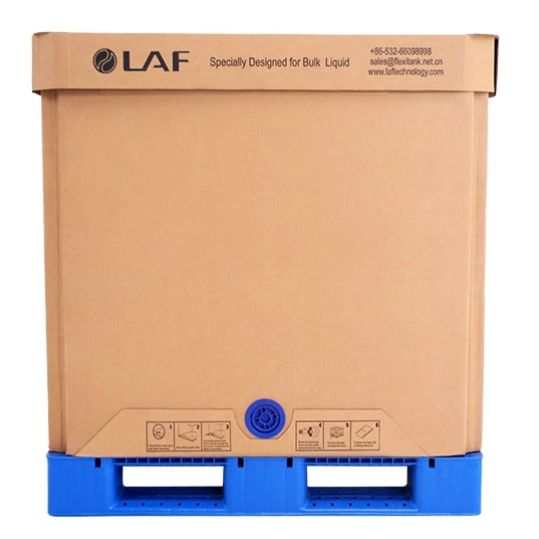
Among the packaging formats used for medium-volume liquid transport, Square Paper IBC has become an increasingly practical option. It is designed to support bulk liquid storage and transportation in a way that balances efficiency, structural reliability, and environmental considerations. Compared with traditional drums, returnable IBCs, and bottle-in-cage IBCs, this format offers a different approach: one that focuses on containerized movement, easier handling, lower post-use burden, and better use of transport space.
This article looks at the topic from an industry perspective. Rather than treating Square Paper IBC as just another package, it makes more sense to see it as a logistics tool. Its value lies not only in what it holds, but in how it helps improve the full journey of bulk liquid movement.
Why Bulk Liquid Efficiency Depends on Packaging Design
When companies talk about transport efficiency, they often focus on freight rates, warehouse planning, or container utilization. But packaging design is one of the most direct factors behind all three.
A packaging format can improve efficiency when it helps reduce unnecessary handling, simplify loading and unloading, use container space more effectively, and avoid extra work after delivery. In bulk liquid transport, those gains matter because even small operational improvements can multiply quickly across repeated shipments.
Traditional packaging formats often create friction somewhere in the process. Drums may be familiar and widely used, but they require more individual handling units. Returnable packaging may offer durability, but it can also bring cleaning, return logistics, and storage complexity. Rigid containers may protect cargo well, but they are not always the most efficient format once discharge is complete.
This is why a collapsible and recyclable square-format IBC attracts attention. It is not only about replacing one type of container with another. It is about removing inefficiencies from the system around the container.
What Square Paper IBC Is Designed to Solve
Square Paper IBC is designed for bulk liquid packaging in medium-volume applications. It is used where businesses need a practical way to store and transport non-hazardous liquids with less operational burden than more traditional packaging formats.
Its role becomes clearer when compared with the usual alternatives. A company may ship liquids in drums, returnable IBCs, or bottle-in-cage IBCs. Each of those options can work, but they also come with different trade-offs in labor, storage, return handling, and disposal. A collapsible paper-based IBC is intended to reduce some of those trade-offs by offering a one-way packaging solution that is easier to manage across the full logistics cycle.
This matters especially in international trade. Once a shipment reaches its destination, the receiver usually wants the unloading process to be simple. They do not want extra costs tied to collecting empties, arranging returns, or managing high disposal expenses. A packaging format that reduces those burdens can create value for both the shipper and the buyer.
How the Square Shape Helps Use Space More Efficiently
One of the most practical advantages of Square Paper IBC is visible before the liquid even starts moving: the shape itself.
In logistics, square and rectangular formats generally align better with the dimensions of containers and storage areas than round ones. This means the available space can be used more efficiently. That may sound simple, but the effect on daily operations can be significant.
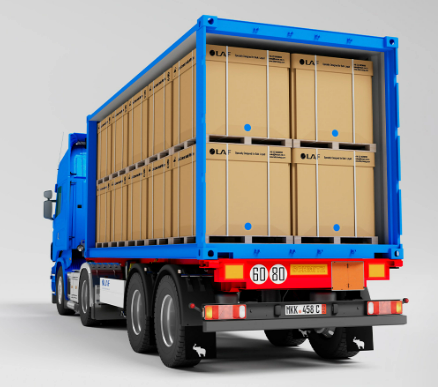
A better space-fit can improve container stuffing, reduce wasted gaps, and make warehouse organization cleaner. With fewer awkward empty zones between packages, more product can be moved in the same transport footprint. This directly supports cost efficiency because transport is not only about what is shipped, but how fully the available space is used.
The space advantage becomes even more meaningful when compared with drums. A single paper IBC can consolidate much more liquid than an individual drum, reducing the total number of handling units needed for the same shipment volume. That means less moving, less repositioning, and fewer repetitive loading actions.
For operations that ship regularly, this kind of packaging efficiency can have a very real impact on labor time and workflow consistency.
Why Consolidation Matters in Liquid Transport
Bulk liquid logistics becomes more efficient when more cargo can be handled in fewer units. This is one of the clearest reasons Square Paper IBC improves transport performance.
The format is designed to carry around the volume that would otherwise require several drums. That alone changes how a shipment is prepared. Instead of managing many smaller packages, operators work with fewer, larger units. This simplifies container loading, reduces manual handling, and creates a more streamlined packing plan.
In practical terms, consolidation reduces:
the number of packages to move,
the number of loading and unloading actions,
the number of contact points in handling,
and the amount of labor needed to organize the shipment.
That does not mean smaller containers have no place in the industry. They still suit many applications. But when the goal is efficient medium-volume liquid transport, a more consolidated format often makes more operational sense.
This is especially true when shipping large quantities repeatedly. Over time, the savings in handling effort and container preparation can become more valuable than the packaging unit cost alone.
How Structural Design Supports Safer and Smoother Operations
Efficiency only works when the packaging remains reliable in real transport conditions. If a container is difficult to handle or vulnerable under load, any theoretical logistics advantage quickly disappears. That is why structural design is central to the performance of a Square Paper IBC.
Modern paper IBC structures are not simply folded paper boxes. They are engineered systems built to improve strength and overall integrity. The box body is engineered using a continuous-winding process a continuous-winding process and a bionic laminated structure, creating a seamless and integrated form. That kind of construction is intended to improve strength compared with more conventional approaches.
Another important structural idea is the effort to avoid stress concentration, especially at the corners. Traditional paper IBC corners may rely on manual folding, which can create weak points under pressure. By contrast, an improved forming process helps distribute stress more evenly, contributing to better overall durability.
The material also refers to a steel-like technology based on cross-layer stacking in a bionic laminated structure. The purpose here is not to turn paper into metal, of course, but to improve isotropic strength and structural integrity beyond what conventional corrugated construction typically offers.
From a logistics perspective, the takeaway is simple: stronger structure supports more reliable handling, stacking, movement, and storage. That reliability is part of transport efficiency, because damage prevention is always more efficient than damage recovery.
The Importance of Collapsibility in Storage and Post-Use Handling
A major reason collapsible formats continue to gain attention is what happens before filling and after discharge.
Rigid packaging systems occupy space even when empty. That can create storage pressure at origin and destination. By comparison, a collapsible paper IBC takes up less space when not in use, which helps warehouses manage packaging inventory more efficiently.
This matters in two ways. First, it reduces storage burden before loading. Second, it reduces the space problem after the cargo has been discharged. Since the packaging is intended as a one-way disposable solution, there is no need to dedicate the same kind of storage area for empties waiting to be returned.
In many supply chains, empty packaging quietly creates a lot of cost. It sits in yards, occupies warehouse corners, or becomes another planning problem for operations teams. A collapsible single-use format helps remove that issue from the system.
That is why the value of Square Paper IBC is not only in shipping the liquid. It is also in reducing what the packaging demands from the operation once the liquid is gone.
How Loading and Discharge Flexibility Improves Workflow
Bulk liquid packaging must work not only in transit, but also at the filling point and at destination. If loading or discharge is awkward, the whole process slows down.
Square Paper IBC systems are designed with practical loading and discharge configurations, including top loading combined with either top or bottom discharge. This kind of flexibility allows the packaging to fit different operational preferences and product handling routines.
For some users, top discharge may fit existing systems. For others, bottom discharge may improve emptying efficiency. The key point is that the packaging is not rigid in operational logic. It can be adapted to how the liquid is actually managed in the field.
Supporting accessories such as valves, adaptors, and support frames also play a role here. These components help make the packaging part of a broader loading and unloading system rather than a standalone container. In liquid transport, the less labor-intensive the transfer process becomes, the more efficient the operation usually is.
This aligns with a larger industry trend: reducing dependence on manual handling and moving toward smoother machine-assisted loading and discharge.
Why One-Way Packaging Can Reduce Hidden Costs
One of the strongest advantages of collapsible paper IBCs is not always visible in the package itself. It shows up in the costs that no longer need to be paid.
With returnable containers, the job is not finished after discharge. The used packaging often needs to be collected, returned, cleaned, and prepared for reuse. That may work well in closed-loop systems, but in many international or distributed supply chains, it becomes complicated and expensive.
A one-way disposable packaging solution avoids much of that complexity. Once the liquid is discharged, the user does not need to manage return logistics or cleaning costs in the same way. That can simplify operations at destination and reduce the administrative work tied to container recovery.
This is especially relevant for liquid commodity buyers who do not want to deal with large numbers of used containers after receiving product. In markets with stricter environmental or disposal requirements, the burden of handling used packaging can become even more significant.
So while the phrase “cost saving” is often used broadly, in this case it is linked to specific operational realities:
These are the kinds of savings that can be felt directly in logistics operations.
The Role of the Liner in Product Compatibility
The liner is a critical part of any paper IBC system because it is the component that directly contains the liquid cargo.
The liner options include different shapes and materials, which makes the system more adaptable across non-hazardous liquid applications. The availability of different liner materials is important because not all liquids behave the same way in storage and transport. Some require stronger barrier performance, while others need simpler containment solutions.
There is also optional sterilization available based on product requirements. This detail matters because it broadens the use potential of the packaging in sectors where handling standards may be more specific.
From an operational point of view, liner flexibility improves packaging efficiency by allowing one structural platform to support different liquid categories without changing the whole transport concept. That means users can maintain a more consistent packaging approach while adjusting the liner to fit the product.
Where Square Paper IBC Fits Best
Square Paper IBC is not a universal answer for every liquid product, but it fits very well in several important sectors dealing with non-hazardous bulk liquids.
Food and Beverage Applications
In food and beverage logistics, medium-volume liquid transport often needs to balance efficiency, cleanliness, and manageable discharge. Products such as juices, edible oils, syrups, wine, and sauces can benefit from a packaging format that consolidates volume while remaining practical to handle.
Industrial Oils
For lubricants, base oils, and glycols, transport efficiency often depends on reducing packaging complexity and handling time. A square-format collapsible IBC can support that goal by simplifying container loading and discharge.
Non-Hazardous Chemicals
Liquids such as emulsions, essences, plant extracts, and nutrient liquids also fit the general application range. In these sectors, packaging needs to perform reliably without adding unnecessary cost or disposal burden.
Across these industries, the common requirement is clear: move more liquid efficiently, reduce avoidable logistics costs, and make destination handling easier.
How Sustainability Becomes Part of the Efficiency Story
For many businesses, sustainability is no longer a separate discussion from logistics performance. The two are becoming increasingly connected.
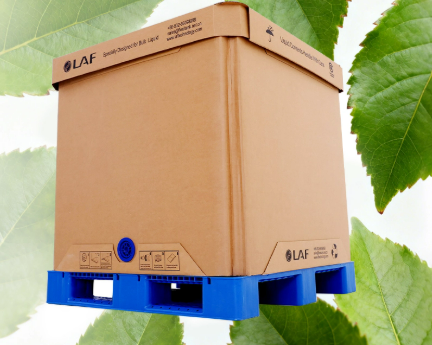
A packaging format that is 100% recyclable and designed to reduce environmental impact offers more than a branding advantage. It can help businesses respond to customer expectations, disposal regulations, and internal sustainability goals while still supporting practical transport needs.
The product’s carbon footprint has been verified under ISO 14067, demonstrating significantly lower carbon emissions than conventional plastic IBC totes. That matters because it shows that environmental value is being linked to a recognized assessment standard, not just a general green claim.
At destination, recyclable disposable packaging may also be more attractive in regions where environmental rules are stricter and disposal costs are taken seriously. In those environments, efficiency includes not only loading and freight performance, but also what happens to the packaging after use.
That is why the sustainability side of Square Paper IBC should not be treated as a bonus feature. In many cases, it is part of the operational logic behind choosing it in the first place.
Why Temperature-Sensitive Liquids Need Extra Consideration
Not every bulk liquid behaves the same way during transit. Some products may crystallize or solidify, which can make discharge slower or more difficult after arrival.
For those situations, the option of an electric heating pad becomes relevant. This can be pre-installed at the bottom of the PE liner bag before loading, then used after arrival to help heat and melt the product when needed.
From an efficiency perspective, this is important because transport is only successful when the cargo can be discharged effectively at destination. A liquid that moves well during loading but becomes difficult to unload later creates delays and labor issues. Optional heating support helps reduce that risk for specific liquid categories.
Even here, the value is not in the technical accessory alone. It is in protecting the continuity of the logistics process from filling through final discharge.
What Makes Square Paper IBC More Than Just a Container
The most useful way to understand Square Paper IBC is to see it as part of a broader logistics strategy.
It improves bulk liquid storage and transport efficiency by combining several advantages into one packaging system:
better space utilization,
more volume consolidation than smaller packages,
a structure designed for strength,
collapsibility for easier storage management,
flexible loading and discharge options,
no return or cleaning burden after discharge,
and recyclable, lower-impact packaging at destination.
No single feature explains the full value on its own. The advantage comes from how these features work together across the entire movement of liquid cargo.
That is why more companies are rethinking packaging in practical terms. They are not only asking, “What can this package hold?” They are asking, “How much work does this package save?” In bulk liquid logistics, that is often the better question.
A More Practical Direction for Bulk Liquid Logistics
As supply chains continue to focus on cost control, transport efficiency, and sustainability, packaging formats that remove friction from operations will keep gaining relevance. Square Paper IBC stands out because it supports all three concerns at once. It helps businesses move non-hazardous liquids in a more consolidated and organized way, reduces the burden of return and cleaning, makes better use of storage and container space, and supports a more recyclable packaging model.
For companies exploring smarter bulk liquid packaging options, this format offers a strong example of how packaging can improve more than containment alone. It can improve the way the entire logistics process works. Industry leaders like LAF who specialize in bulk liquid packaging and containerized transport solutions, the direction is clear: the future of liquid logistics belongs to packaging systems that are not only strong enough to carry the product, but intelligent enough to improve the whole operation.