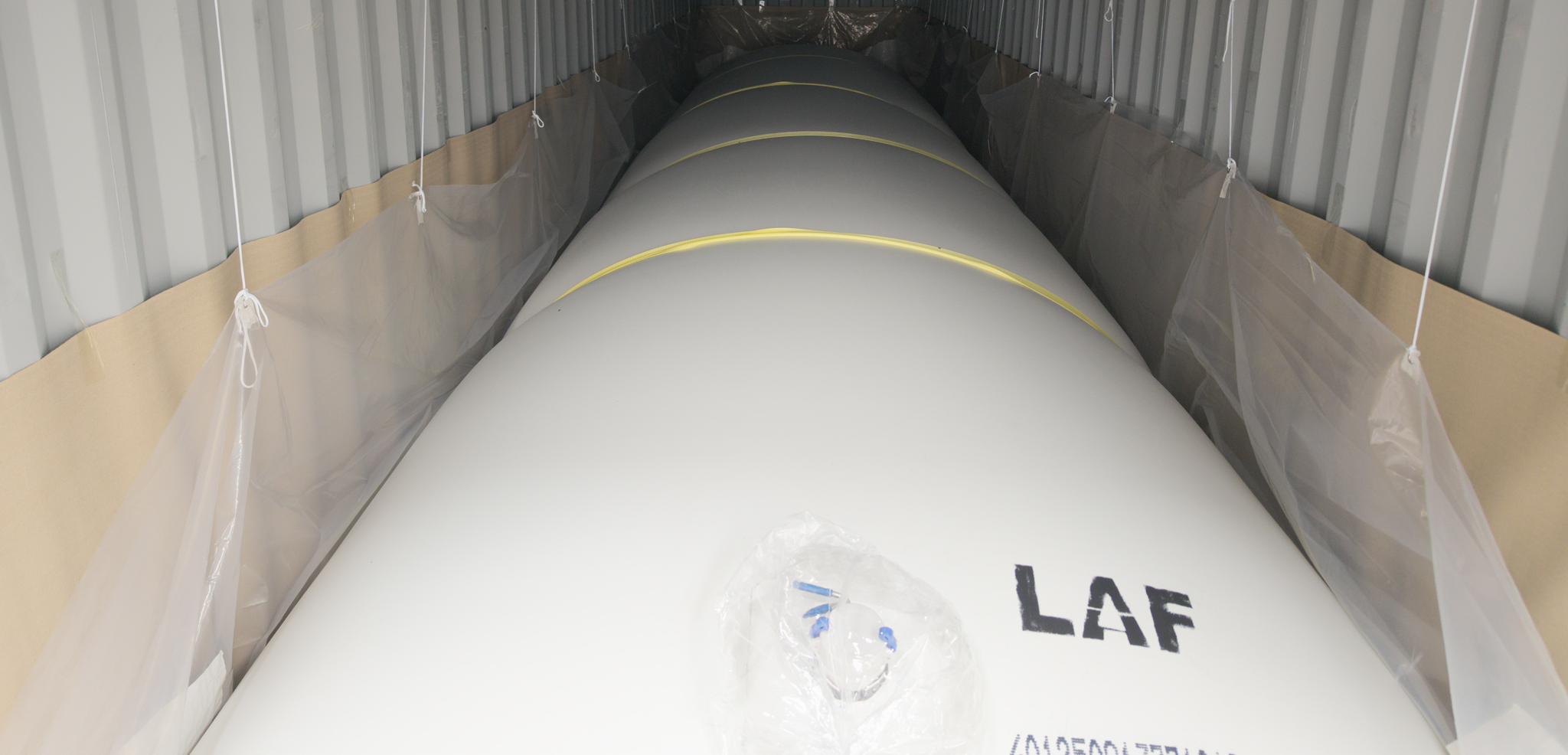
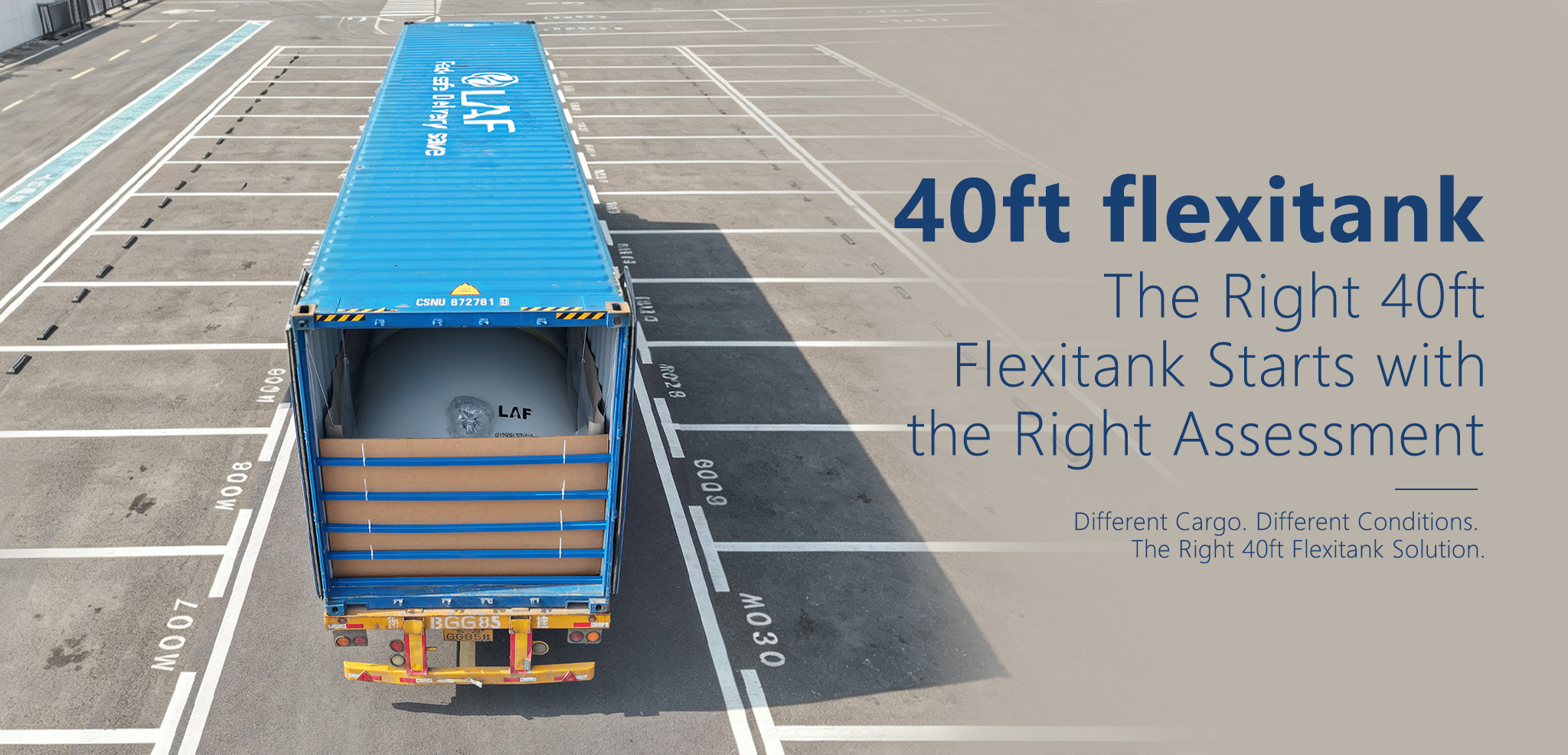
Different cargoes. Different conditions. The right 40ft Flexitank solution starts with proper selection.
A 40ft Flexitank can provide greater loading capacity and more flexibility for bulk liquid transportation. But choosing the right solution is not simply a matter of selecting the largest available capacity.
Liquid properties, temperature, viscosity, transportation route, and discharge conditions can all affect flexitank performance. For shippers, the key question is not “How much can it hold?”, but rather “Which 40ft Flexitank solution is right for my cargo and transport conditions?”
This guide outlines the key factors to consider when selecting a 40ft flexitank solution.
1. Why Loading Capacity Is Only the Starting Point
Loading volume is an important consideration, but it is only one part of the selection process.
Before choosing a flexitank, several factors should be evaluated:
Cargo density
Viscosity
Loading and ambient temperature
Chemical compatibility
Transportation route and mode
Expected transportation duration
Discharge method and equipment
Applicable loading and transportation requirements
For example, two liquids may require the same loading volume but completely different flexitank configurations because of differences in viscosity or temperature.
A suitable bulk liquid transport solution should therefore be designed around the complete transportation scenario rather than a single specification.
2. Choose According to Cargo Temperature
Temperature can directly affect both the cargo and the flexitank.
Standard-Temperature Applications
For conventional bulk liquids such as edible oils, base oils, latex, and other compatible non-hazardous liquids, standard material and structural configurations may be suitable. The solution should still be selected according to the cargo's specific temperature range and characteristics.
High-Temperature Applications
Some products, such as bitumen and other high-temperature liquids, require specialized solutions. High filling temperatures can place additional demands on the flexitank's film materials, structure, valves, and related equipment.
A high temperature flexitank solution may incorporate:
High-temperature-resistant PE film
Reinforced structural design
Suitable valve configurations
Heating systems where required
The appropriate configuration should be determined according to actual cargo temperature, loading conditions, transportation duration, and discharge requirements.
Low-Temperature Applications
Cold environments can affect material flexibility and cargo characteristics. In extremely low temperatures, the flexitank needs to maintain sufficient flexibility and structural stability throughout transportation.
Low-temperature solutions can therefore involve specialized materials and structural designs developed for the expected operating environment.
3. Choose According to Cargo Viscosity
Viscosity becomes particularly important when transporting high-viscosity liquids. Products such as polyether polyols, plasticizers, syrups, and certain industrial oils may become more difficult to discharge as viscosity increases. Several factors should therefore be considered:
Heating Requirements
For temperature-sensitive or high-viscosity cargoes, maintaining an appropriate cargo temperature can help support efficient discharge. Depending on the application, heating systems may be incorporated into the overall transportation solution.
Valve and Discharge Configuration
The valve and discharge setup should be matched to the cargo characteristics and unloading equipment. The appropriate configuration can help improve discharge efficiency and support more effective cargo recovery.
Residue Control
For high-viscosity products, residual cargo can become an important operational and cost consideration. A customized flexitank solution can incorporate low-residue design considerations based on the cargo and unloading process.
In other words, selecting a flexitank for viscous liquids requires looking beyond the bag itself and considering the complete loading-to-discharge process.
4. Choose According to Cargo Type
Different liquid products have different transportation requirements. A 40ft Flexitank may be suitable for a broad range of compatible non-hazardous liquids, including:
Food & Beverage
Edible oils
Syrups
Sweeteners
Other compatible food-grade liquids
Industrial & Energy
Base oils
Industrial oils
Bitumen
Other compatible oil-based products
Chemical
Polyether polyols
Plasticizers
Liquid latex
Other compatible non-hazardous chemicals
However, cargo category alone does not determine suitability. The same product category may require different solutions depending on density, viscosity, temperature, chemical properties, transport duration, and unloading conditions.
That is why cargo assessment should come before final product selection.
5. Choose According to Transportation Mode
A 40ft Flexitank may be used across ocean, rail, road, and multimodal transportation, but different transport environments can create different operational requirements.
Ocean Transportation: Long-distance ocean transport requires consideration of container condition, cargo movement, transportation duration, and applicable maritime requirements.
Rail Transportation:Rail transportation can involve different dynamic loads and operating conditions. The flexitank and installation method should be matched to the specific route and requirements.
Road Transportation:Road transportation involves continuous vehicle movement and dynamic forces. Proper installation, securing, and operational procedures are essential.
Multimodal Transportation:When cargo moves between ocean, rail, and road, the solution needs to consider the combined conditions throughout the entire transportation chain.
A reliable 40ft flexitank solution therefore needs to be evaluated based on the complete route—not just one individual transportation segment.
6. What Information Should Customers Provide?
The more complete the cargo and transportation information, the more accurately a suitable flexitank can be selected. Customers should ideally provide:
Cargo Information
Product name
SDS, where applicable
Density
Viscosity
Chemical characteristics
Loading Information
Planned loading volume
Loading temperature
Loading equipment
Transportation Information
Origin and destination
Transportation mode
Transportation duration
Expected ambient temperature
Applicable route requirements
Discharge Information
Discharge temperature
Unloading equipment
Valve and connection requirements
Heating requirements, if applicable
These details help determine the appropriate material, capacity, structure, and accessories.
7. How LAF Develops a Customized 40ft Flexitank Solution
There is no single 40ft Flexitank configuration that is ideal for every cargo. LAF evaluates the complete application before recommending a solution, considering factors such as: cargo properties, temperature, viscosity, loading volume, transport conditions, discharge requirements
Based on this assessment, LAF can provide customized options including:
Capacity Configuration:Selection of appropriate loading capacity according to cargo volume and shipment requirements.
PE Film Solution:Different PE film formulations can be selected according to cargo properties, including food-grade, high-barrier, high-temperature, and low-temperature applications.
Valve Configuration:Valve structures and connections can be matched to cargo characteristics and the customer's loading and discharge equipment.
Temperature Solutions: Specialized solutions can be developed for high- or low-temperature applications, including heating management options where required.
Low-Residue Design:For suitable viscous liquids, design considerations can focus on improving discharge efficiency and reducing residual cargo.
Installation & Operational Support:LAF can provide standardized installation SOPs, installation guidance, and loading supervision services to support proper operation.
The Right 40ft Flexitank Starts with the Right Assessment
Selecting a flexitank should never be based on capacity alone. The right solution needs to consider what the cargo is, how it behaves, how it will be transported, and how it will ultimately be discharged.
With extensive experience in 40ft Flexitank development and application, LAF combines material selection, structural design, configuration, and operational support to develop customized solutions for different bulk liquid transportation requirements.
Different Cargo. Different Conditions. The Right 40ft Flexitank Solution.
Looking for the right flexitank for your cargo? Contact LAF for a customized assessment.