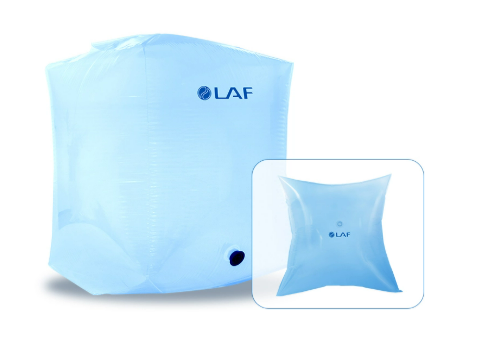
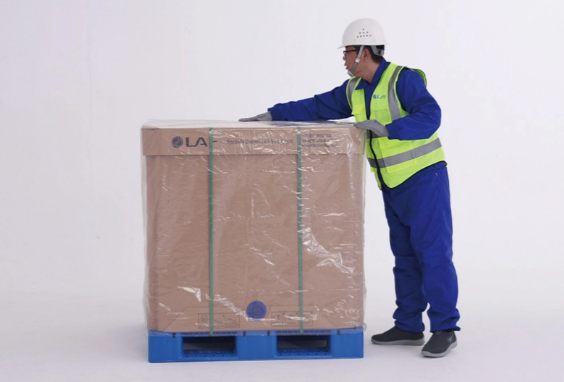
A Paper IBCcan be a safe and efficient packaging option for many food-grade liquids, provided that the complete packaging system is designed for the intended product and handled under appropriate hygiene controls. The word “paper” can be misleading because the liquid normally does not contact the corrugated outer box. The food-contact layer is the inner liner, while the paper-based structure provides mechanical support, stacking strength, and protection during transport. Safety therefore depends on the liner material, fittings, manufacturing controls, filling process, storage conditions, and compatibility with the liquid.
The Food Contacts the Liner, Not the Paperboard
Understanding the Basic Paper IBC Structure
A typical collapsible paper IBC consists of a strong outer box, a pallet or base, a top cover, and a disposable inner liner or cassette. The outer structure carries the mechanical load and helps the filled unit maintain its shape. The liner holds the liquid and includes filling and discharge fittings. When assembled correctly, the liquid remains inside the liner throughout filling, transport, storage, and unloading.
This separation is fundamental to food safety. Corrugated paperboard is not normally intended to act as the direct liquid-contact barrier. Instead, the inner film and valve surfaces are selected for direct contact with the product. The box protects the liner from external impact, supports stacking, and allows the empty packaging to be shipped and stored in a collapsed form.
What “Food-Grade” Should Mean in Practice
Materials Must Be Suitable for the Intended Use
Food-contact materials should be authorized or otherwise suitable for the intended conditions of use in the destination market. This does not mean that one generic certificate covers every liquid and every temperature. Suitability can depend on food type, fat content, acidity, alcohol content, contact duration, storage temperature, and filling temperature. A liner used for ambient-temperature syrup may require a different assessment from one used for hot edible oil or an acidic concentrate.
The packaging supplier should be able to provide relevant declarations or test information for the product-contact materials and fittings. The buyer should review whether the documentation applies to the actual liner construction, manufacturing source, intended food category, and use conditions. Claims such as “food grade,” “FDA,” or “EU compliant” should be supported by clear documents rather than treated as broad marketing terms.
The Packaging Must Not Unacceptably Affect the Food
A suitable food-contact system should not transfer substances to the liquid at levels that create a safety concern, change the food composition unacceptably, or impair taste and odor. This is especially important for products with long storage periods, high fat content, strong extraction properties, or sensitivity to off-odors. Migration testing, sensory evaluation, and product-specific compatibility work may be required depending on the application.
The liner should also resist swelling, stress cracking, delamination, seal failure, and loss of strength when exposed to the liquid. Chemical compatibility is not only a regulatory question; it is also a mechanical one. A material may be acceptable for brief contact but unsuitable for weeks of transport at elevated temperature. The buyer and supplier should therefore consider both food-contact compliance and functional performance.
Four Controls Determine Whether the System Is Safe
1. Hygienic Raw Materials and Manufacturing
The inner liner should be produced from controlled materials in a manufacturing environment appropriate for food-contact packaging. Raw-material identification, production records, cleanliness procedures, pest control, personnel hygiene, and traceability all influence the final safety level. The product-contact surfaces should be protected from dust, insects, moisture, oils, and handling contamination before they reach the filling site.
2. A Reliable Liner, Seal, and Valve Design
The liner must withstand the hydrostatic pressure created by hundreds of liters of liquid. Seams, welds, corners, and fittings are common stress points, so the design should distribute the load and remain stable inside the supporting box. Valves and caps must seal effectively and remain protected from impact during handling.
The number and position of film layers may be selected according to barrier needs, puncture resistance, flexibility, and the liquid’s characteristics. Products sensitive to oxygen, light, or aroma loss may require enhanced barrier properties. Highly viscous liquids may need a larger outlet, a different liner geometry, or an approved heating arrangement to support discharge without excessive residual product.
3. Correct Assembly and Filling at the Plant
Even a well-designed Paper IBC can be compromised by poor assembly. The outer box must be opened, squared, locked, and placed on the correct pallet. The liner or cassette should be inserted in the prescribed orientation without twisting. Filling and discharge fittings must align with the openings in the box. Operators should inspect for punctures, trapped folds, damaged caps, or incorrect connections before filling begins.
The filling hose, tank, pump, and fittings should be cleaned according to the product’s hygiene plan. A closed connection helps protect the liquid from the environment. The filling rate should be controlled so the liner expands evenly and the box remains stable. The final quantity must stay within the approved capacity and gross-weight limit. Overfilling can stress the seams and outer box, while severe underfilling may allow more movement during transport.
4. Suitable Storage, Stacking, and Transport
Paper-based outer structures must be protected from rain, standing water, excessive humidity, and direct contact with wet floors. The filled unit should be stored on a sound pallet in a covered area. Forklift operators need clear access and should avoid puncturing the box or liner. Damaged corners, crushed panels, leaning units, and wet paperboard require investigation before shipment.
Stacking limits depend on the specific design, filled weight, storage time, temperature, humidity, pallet condition, and whether the load is static or moving. Users should follow the supplier’s validated stacking instructions rather than copying a limit from another Paper IBC. During road, rail, or sea transport, units should be arranged and secured so that they do not slide, tilt, or experience concentrated pressure.
Which Food Liquids Are Commonly Suitable?
Edible Oils and Liquid Sweeteners
Edible oils, including vegetable oils and certain specialty oils, are frequent Paper IBC applications because they are non-hazardous, pumpable, and commonly shipped in medium bulk quantities. Liquid sugar, glucose, sorbitol solutions, syrups, and similar ingredients may also be suitable when the liner material and fittings are compatible with the product concentration and temperature.
Juice Concentrates, Sauces, and Beverage Ingredients
Juice concentrates, beverage bases, soy sauce, vinegar, and food sauces may be transported in Paper IBCs when the liner is appropriate for acidity, flavor sensitivity, and required shelf life. Some products are sensitive to oxygen or light, while others may ferment or deteriorate if temperature control is poor. Packaging selection cannot replace the product’s normal preservation and cold-chain requirements.
Dairy-related liquids and emulsions require particularly careful hygiene and temperature management. The packaging must be suitable for the intended contact conditions, and the filling environment must prevent microbial contamination. Where aseptic performance is required, the buyer should confirm that the complete system and filling process are designed and validated for that purpose. A standard food-grade liner should not automatically be described as aseptic.
When a Paper IBC May Not Be the Right Choice
Hazardous, Pressurized, or Incompatible Liquids
Paper IBCs are generally used for non-hazardous liquids. Products classified as dangerous goods, liquids that release gas, or products requiring pressure containment need packaging specifically approved for those conditions. The outer box is not a pressure vessel, and the liner should not be exposed to internal pressure beyond its intended filling and transport conditions.
Chemical incompatibility, very high filling temperatures, sharp crystals, phase separation, or aggressive cleaning agents may also make a standard liner unsuitable. The supplier needs accurate product data, including composition, density, viscosity, pH, temperature, and contact time, to evaluate the application.
Uncontrolled Moisture or Rough Handling Environments
If the logistics route exposes the outer box to rain, flooding, uncovered storage, or severe mechanical abuse, a paper-based structure may require additional protection or may not be appropriate. The system depends on keeping the outer box structurally sound. Water-damaged board can lose strength even when the liner itself remains intact.
Safe Filling and Discharge Procedures Matter
Inspect Before Filling
Check the outer box, pallet, liner package, valves, caps, and identification. Confirm that the filling line is clean and that the receiving Paper IBC matches the product and batch record. Assemble the unit on level ground and keep sharp tools away from the liner. Once the liner is installed, verify the orientation of the top filling port and bottom discharge valve.
During filling, support the hose so it does not pull on the fitting. Start slowly, observe the liner expansion, and increase the rate only when the system is stable. Stop at the approved quantity, close the valve, fit the cap, clean the exterior, and apply seals or labels. Record the packaging batch, product batch, fill quantity, date, and operator.
Protect the Product During Discharge
At destination, inspect the unit for water damage, puncture, deformation, broken seals, or leakage. Confirm that the receiving tank has enough capacity and that the discharge hose and fittings are clean. Connect the hose before opening the valve. Control the flow to avoid spills and prevent the hose from placing torque on the outlet.
For viscous products, use only approved warming or pumping methods. Cutting the liner, applying uncontrolled heat, or using dirty tools can compromise both safety and recovery. After discharge, close the valve and manage the used liner according to the food residue and local waste requirements. The outer paper components may be recyclable where suitable collection systems exist, but recyclability does not remove the need to separate contaminated parts correctly.
Questions Buyers Should Ask Before Approval
Before using a Paper IBC for a food liquid, buyers should ask for the exact liner specification, food-contact documentation, intended-use conditions, production traceability, capacity, valve design, filling and discharge instructions, stacking limits, moisture-protection requirements, and available performance testing. They should also confirm whether the application has been reviewed for the product’s density, viscosity, temperature, acidity, fat content, oxygen sensitivity, and transport duration.
Common Misunderstandings About Food-Grade Paper IBCs
The first misunderstanding is that paper touches the food. In a correctly designed system, the inner liner is the product-contact layer. The second is that “single-use” automatically guarantees hygiene. A new liner avoids previous-cargo contamination, but dirty filling equipment or poor handling can still contaminate the liquid. The third is that recyclable packaging is automatically food grade. Environmental attributes and food-contact safety are separate questions, and both need evidence.
Another misunderstanding is that one liner is suitable for every food. Food types and use conditions differ, so compatibility should be assessed for the actual liquid. Finally, a certification or declaration does not replace good operation. The packaging must be stored, assembled, filled, stacked, transported, and discharged correctly to maintain the safety designed into the system.
Paper IBCs Can Be Safe When the Whole System Is Controlled
Paper IBCs can safely transport many food-grade liquids when the inner liner and fittings are suitable for direct food contact, the structure is matched to the load, the product is compatible with the materials, and the entire operation follows hygienic procedures. The most reliable decision is based on intended-use documentation, product data, realistic transport conditions, and controlled filling and discharge practices rather than on a general “food-grade” label.
LAFsupplies collapsible Paper IBC and liner solutions for food, beverage, edible oil, and other non-hazardous liquid applications. Businesses assessing a new liquid, filling temperature, storage period, or logistics route can Contact LAF to review product characteristics and identify a suitable Paper IBC configuration.