Introduction
Olive oil is a valuable food product that requires careful handling during international transportation. From olive oil producers and exporters to bottling companies and food distributors, businesses need reliable packaging that helps maintain product quality while controlling logistics costs. As demand for efficient bulk liquid transportation continues to grow, flexitanks have become a practical packaging option for shipping olive oil across international markets.
A flexitank, also known as a flexibag, is a flexible bag installed inside a standard shipping container to transport compatible non-hazardous liquids. For olive oil shipments, food-grade flexitanks allow exporters to move liquid cargo in bulk instead of dividing it into numerous drums or smaller containers. The flexible structure helps utilize available container space while supporting more efficient loading and unloading operations.
The main characteristics of food-grade flexitanks include:
Food-Grade Construction: The inner film is designed for suitable food-contact applications, helping maintain hygienic conditions during olive oil transportation.
Multi-Layer Structure: Flexible film components work together to contain liquid cargo and support the bag during handling and transportation.
Heat-Sealed Connections: Heat sealing is used during manufacturing to create secure connections between flexible film components.
Bulk Liquid Handling: Compatible valves allow olive oil to be transferred through suitable pumping systems, reducing the need to handle numerous individual packages.
Single-Use Design: Flexitanks are intended for one shipment and should not be refilled after discharge. Suitable used components may be recycled through appropriate facilities, depending on local recycling conditions.
LAF offers food-grade flexitank solutions for compatible non-hazardous liquids, including edible oils. These packaging systems are designed to support bulk liquid transportation while reducing some of the handling requirements associated with traditional rigid packaging.
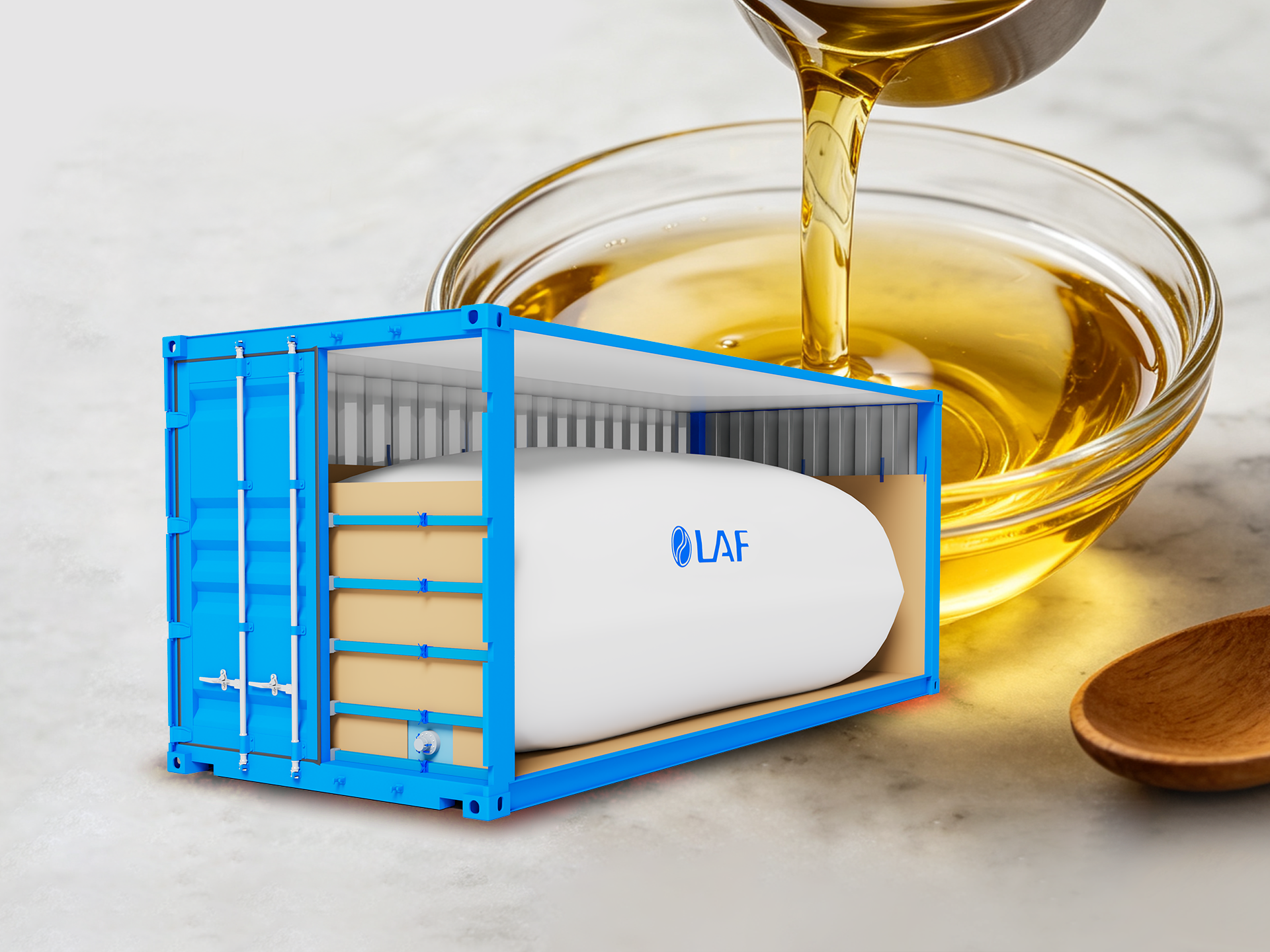
Major Advantages of Using Flexitanks for Olive Oil Shipping
For olive oil exporters handling large-volume shipments, flexitanks offer practical advantages in container utilization, transportation costs, and cargo handling. Compared with traditional drums or smaller rigid containers, a flexitank allows olive oil to be transported in bulk within a standard shipping container. This approach can simplify logistics operations while supporting more efficient international edible oil transportation.
Improved Container Space Utilization
Flexitanks can make more efficient use of shipping container space by holding olive oil in a flexible bag rather than numerous individual rigid packages. This reduces the space occupied by separate packaging units and allows exporters to utilize available loading capacity more effectively. For suitable bulk shipments, improved container utilization may help lower freight costs per unit of olive oil, depending on permitted payload limits and shipping arrangements.
Lower Handling and Logistics Costs
Transporting olive oil in flexitanks can reduce the handling operations associated with filling, moving, and unloading individual drums. Liquid cargo can be transferred through compatible pumping systems, simplifying certain loading and discharge procedures. Since flexitanks are designed for single-use transportation, exporters also avoid the cleaning and return logistics required for some reusable packaging systems. These benefits can contribute to lower overall logistics expenses, particularly for suitable one-way international shipments.
Food-Grade Packaging for Olive Oil
Food-grade flexitanks feature an inner contact surface designed for compatible edible liquids, helping maintain hygienic conditions during transportation. When properly installed and connected to clean filling equipment, the enclosed packaging system can reduce unnecessary exposure to dust, moisture, and external contaminants. Combined with appropriate temperature management and handling procedures, this packaging approach helps support olive oil quality from the loading facility to the destination.
Convenient Loading and Discharge
Flexitanks allow olive oil to be transferred directly between the packaging system and suitable storage tanks through compatible pumps and hoses. This reduces the need to handle numerous separate containers and may improve operational efficiency at both the loading and receiving facilities. For olive oil bottling plants, food processors, and bulk distributors equipped with liquid handling systems, flexitanks can simplify cargo transfer and support smoother supply chain operations.
Overall, flexitanks offer an efficient packaging option for transporting large quantities of olive oil to international markets. Their advantages are particularly relevant when shipment volumes, freight arrangements, and destination facilities support bulk liquid handling, allowing exporters to balance transportation efficiency with product quality requirements.
Key Operational Limitations of Flexitanks
Although flexitanks can improve efficiency in bulk olive oil transportation, they are not suitable for every shipping situation. Their performance depends on container preparation, cargo compatibility, loading procedures, and receiving facilities. Understanding these limitations helps exporters evaluate potential risks and determine whether flexible packaging is appropriate for their logistics requirements.
Unlike reusable packaging options such as ISO tanks, flexitanks are designed for single-use transportation and should not be cleaned or refilled after discharge. This means they may be less suitable for shipping operations that require repeated packaging use. However, their single-use design eliminates the need for empty-container return logistics and cleaning between shipments. Used flexitanks can also be directed to appropriate recycling facilities, depending on local recycling infrastructure and material condition.
Unlike rigid tanks, flexitanks rely on the surrounding shipping container and properly installed supporting components. Damaged flooring, sharp edges, or exposed fasteners may increase the risk of bag damage and leakage during transportation. To minimize these risks, containers should be carefully inspected, cleaned, and fitted with suitable protective components before loading. Correct installation and filling procedures are also important because liquid cargo can shift during transit.
Flexitanks are generally more practical for large-volume olive oil shipments where bulk loading and unloading facilities are available. For smaller orders, mixed olive oil grades, or deliveries to multiple customers, drums and IBC packaging may offer greater flexibility. Flexitank operations also require compatible pumps, hoses, and receiving tanks, which may involve additional preparation for buyers without established bulk liquid handling systems.
Despite these limitations, flexitanks remain a practical option for transporting compatible non-hazardous olive oil shipments in bulk. By selecting suitable packaging, inspecting containers, and coordinating loading and discharge procedures, exporters can manage transportation risks while benefiting from the efficiency of flexible bulk liquid packaging.
Comparative Analysis of Olive Oil Bulk Transport Methods
Olive oil exporters can choose from several liquid packaging systems, including flexitanks, ISO tanks, drums, and IBC packaging. Each option serves different transportation and distribution needs, depending on shipment volume, handling facilities, and logistics arrangements. Understanding these differences helps businesses select suitable packaging while balancing transportation efficiency, product quality, and overall costs.
Flexitank vs. ISO Tank Containers
Flexitanks use flexible bags installed inside standard shipping containers, while ISO tanks rely on rigid tank structures designed for bulk liquid transportation. For suitable one-way olive oil shipments, flexitanks can reduce the need for tank cleaning and return logistics, potentially lowering transportation expenses. ISO tanks, however, may be more practical for businesses operating established tank logistics networks or requiring rigid containment systems.
Flexitank vs. Steel and Plastic Drums
Compared with steel and plastic drums, flexitanks can make better use of container space by carrying olive oil in bulk rather than in numerous individual packages. They also simplify loading and discharge through pumping systems, reducing the handling operations associated with separate drums. Nevertheless, drums remain useful for smaller shipments, divided deliveries, or customers without bulk liquid unloading facilities.
Flexitank vs. Collapsible Paper IBC
Flexitanks are generally suited to larger bulk shipments, while collapsible paper IBCs offer flexibility for medium-volume transportation of compatible non-hazardous liquids. A collapsible paper IBC combines an outer paper-based structure with suitable inner packaging, allowing olive oil to be transported in separate units. This option can be particularly useful for importers requiring smaller delivery quantities or more flexible warehouse distribution.
Flexitank vs. IBC Liner Systems
Unlike flexitanks used inside shipping containers, IBC liners function as internal flexible bags fitted within compatible outer containers. These liners can be customized for collapsible paper IBCs, metal or plastic turnover boxes, and plastic IBC totes. For olive oil transportation, suitable food-grade IBC liners can help maintain hygienic cargo containment while allowing businesses to use their existing container handling systems.
It is important to distinguish these liquid packaging solutions from dry bulk liners, also known as container liners, which are designed for non-hazardous powders, granules, and other dry bulk commodities rather than liquids.
Ultimately, selecting the right packaging for olive oil transportation depends on shipment volume, destination facilities, handling requirements, and total logistics costs. Flexitanks offer practical advantages for large-volume bulk exports, while ISO tanks, drums, and IBC systems may better suit other distribution arrangements.
Technical Best Practices and Maintenance Guidelines for Safe Transit
Safe olive oil transportation requires appropriate packaging selection and careful handling throughout the shipping process. Even when a food-grade flexitank is used, its performance can be affected by container condition, installation quality, filling operations, and the receiving facility's discharge procedures. Exporters should follow the packaging manufacturer's instructions and coordinate with logistics partners before arranging bulk shipments.
Confirm Cargo and Packaging Compatibility
Food-Grade Requirements: Select a flexitank with food-contact components suitable for the intended olive oil application.
Non-Hazardous Liquids Only: Flexitanks are intended for compatible non-hazardous liquid cargo and must not be used to transport hazardous goods.
Valve and Equipment Compatibility: Confirm that the valve arrangement, hoses, and pumps are suitable for handling edible oils.
Inspect the Container Before Installation
Structural Condition: Check the container for damaged flooring, sharp edges, protruding fasteners, and other defects that could damage the bag.
Cleanliness: Make sure the container interior is clean, dry, and suitable for receiving the flexitank.
Supporting Components: Install the necessary protective fittings and bulkhead system according to the manufacturer's guidance.
Follow Suitable Filling Procedures
Clean Transfer Equipment: Use hygienic hoses, pumps, and connections that are compatible with food-grade olive oil handling.
Controlled Filling: Follow the recommended filling procedure and avoid loading beyond the approved capacity of the selected flexitank and transport arrangement.
Connection Checks: Confirm that valves and hose connections are correctly secured before and after loading.
Cargo Documentation: Maintain relevant shipment and packaging information to support coordination between the exporter, freight forwarder, and receiving facility.
Consider Transportation Conditions
Shipping Environment: Evaluate expected temperatures, transit duration, and storage arrangements that may influence olive oil quality.
Cargo Stability: Ensure the flexitank and supporting installation components are correctly positioned before the container is dispatched.
Logistics Coordination: Communicate relevant handling requirements to carriers and destination operators.
Prepare for Safe Unloading
Receiving Equipment: Confirm that the destination has suitable pumping equipment, hoses, and storage tanks for bulk olive oil.
Discharge Procedures: Follow the manufacturer's instructions to reduce unnecessary pressure on the bag and valve during unloading.
Packaging Management: After discharge, collect the used flexitank and arrange suitable recycling or disposal. The bag must not be refilled or used for another shipment.
Work with an Experienced Flexitank Manufacturer
Choosing an appropriate supplier can help exporters select packaging that matches their cargo and logistics requirements. Businesses should consider food-grade packaging suitability, manufacturing quality, installation guidance, and technical support when evaluating flexitank solutions.
LAF Technology specializes in flexible bulk cargo packaging for non-hazardous liquid and dry bulk transportation. Its product range includes Flexitanks, Collapsible Paper IBCs, IBC Liners, and Dry Bulk Liners, with different packaging systems developed for specific cargo types and handling requirements.