In global bulk liquid transportation, packaging is no longer just a container—it directly affects warehousing efficiency, handling labor, transport utilization, and reverse logistics costs. As supply chains become more cost-sensitive and sustainability-driven, businesses are actively seeking alternatives to traditional rigid packaging systems.
Paper IBC has emerged as a practical solution that combines structural efficiency, lightweight design, and one-way logistics advantages. It is increasingly used in food-grade liquids, non-hazardous chemicals, coatings, and other bulk fluid industries.
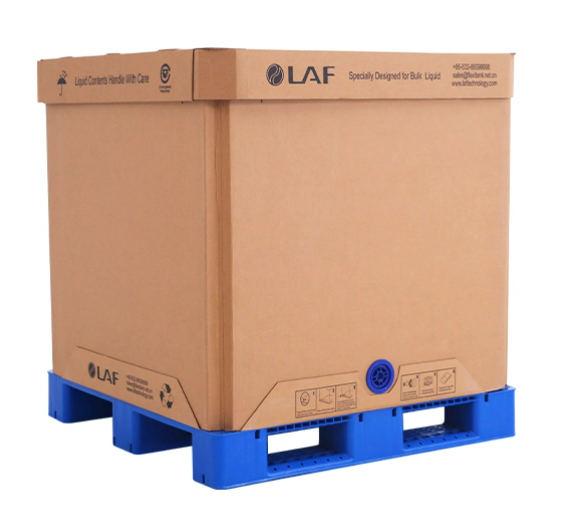
What Is a Paper IBC and Why It Matters in Bulk Logistics
A Paper IBC is a collapsible intermediate bulk container designed for medium-volume liquid transport. It is typically used together with a flexible inner liner that holds the liquid cargo securely, while the outer structure provides stacking strength and transport stability.
Unlike reusable metal or plastic IBCs, Paper IBCs are generally designed for one-way use. After unloading at the destination, the container can be recycled or disposed of locally, eliminating return logistics.
Structural Design of Paper IBC
The performance of a Paper IBC depends heavily on its engineered structure. Most modern designs use high-strength corrugated materials combined with reinforced forming technology.
Reinforced Corner Technology
Corners are designed to distribute pressure more evenly, reducing stress concentration during stacking and transportation.
Laminated Board Structure
Some advanced Paper IBCs adopt multi-layer laminated board construction, improving overall rigidity and load-bearing performance.
How Paper IBC Reduces Storage Costs
One of the most immediate cost advantages of Paper IBCs comes from their collapsible design. Traditional rigid containers occupy full volume even when empty, creating inefficiencies in warehouse utilization.
Paper IBCs, however, can be folded flat when not in use, significantly reducing storage footprint.
Space Optimization in Warehousing
When folded, multiple Paper IBC units can be stored in the space required for a small number of assembled rigid containers. This allows companies to:
Reduce warehouse rental pressure
Improve inventory storage density
Handle seasonal demand more flexibly
This space-saving characteristic is particularly valuable for exporters and large-scale distributors managing high packaging turnover.
Paper IBC vs Traditional Rigid Containers in Real Logistics Scenarios
In bulk liquid logistics, packaging choice directly determines operational efficiency and total supply chain cost. Traditional rigid containers such as plastic drums or metal IBCs are widely used, but they introduce several inefficiencies when compared with Paper IBC systems.
Rigid containers remain bulky even when empty, require return transport, and often need cleaning or inspection before reuse. These processes create additional cost layers that are not always visible at the initial procurement stage.
Paper IBC systems, on the other hand, are designed for one-way logistics. Their collapsible structure and disposable nature eliminate multiple operational steps that traditional systems cannot avoid.
| Aspect | Paper IBC | Traditional Rigid Containers |
| Storage space | Collapsible, minimal space | Fixed volume even when empty |
| Return logistics | Not required | Required |
| Cleaning cost | None | Required after each use |
| Handling efficiency | Lightweight, easy handling | Heavy, labor-intensive |
| Operational cycle | One-way use | Multi-trip reuse |
| Total logistics cost | Lower overall cost | Higher hidden cost |
How Paper IBC Improves Handling Efficiency
Handling cost is another major component of bulk logistics expenses. Traditional containers often require heavy lifting equipment and multiple labor steps during loading and unloading.
Paper IBCs are designed to simplify this process through lightweight construction and container-optimized geometry.
Reduced Manual Labor in Operations
Because Paper IBCs are lighter than metal alternatives, they require less manpower during preparation and movement. When combined with automated filling systems, handling becomes faster and more consistent.
Improved Container Loading Efficiency
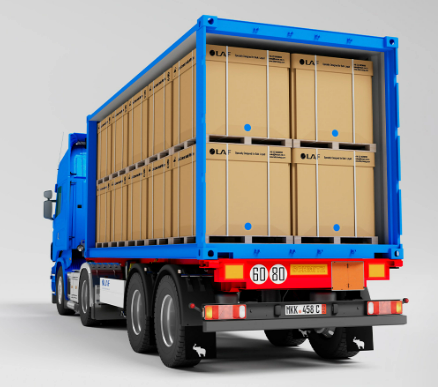
Paper IBCs are designed in square, rectangular, or octagonal shapes, which makes them highly efficient for container loading.
This design helps:
Eliminating Return Logistics and Cleaning Costs
Traditional reusable bulk containers require a full reverse logistics cycle after delivery. This includes return transportation, cleaning, inspection, and redeployment.
These steps generate hidden operational costs that often exceed expectations.
One-Way Packaging Advantage
Paper IBC eliminates return logistics completely. After discharge at the destination:
This significantly simplifies logistics management.
Reduction in Operational Overhead
By removing return and cleaning cycles, companies can reduce:
This results in a more predictable and streamlined cost structure.
Hidden Logistics Costs That Paper IBC Helps Eliminate
In bulk liquid transportation, many costs are not immediately visible in procurement budgets. These hidden logistics costs often accumulate across storage, handling, and reverse logistics processes.
Paper IBC systems help eliminate several of these indirect expenses, which significantly improves total cost efficiency over time.
Major Hidden Cost Categories in Bulk Liquid Logistics
Idle warehouse space cost caused by rigid container storage
Labor cost for container cleaning and preparation
Reverse freight cost for empty container return
Equipment downtime during cleaning cycles
Inventory inefficiency due to non-collapsible packaging
By removing these cost drivers, Paper IBC provides a more predictable and optimized logistics cost structure.
Sustainability Benefits Supporting Cost Reduction
Sustainability is not only an environmental concern—it is also closely tied to logistics cost optimization.
Paper IBCs are made from recyclable materials and designed for single-use cycles, reducing environmental impact across the supply chain.
Lower Carbon Footprint in Transportation
Because Paper IBCs eliminate return shipping, they significantly reduce fuel consumption associated with empty container movement.
Alignment with Green Supply Chain Requirements
Many global buyers now require sustainable packaging solutions. Paper IBC adoption helps companies:
Industrial Applications of Paper IBC
Paper IBCs are widely used in industries that require safe, efficient, and cost-effective bulk liquid transportation.
Common Application Areas
Food-grade liquids such as juices, oils, and syrups
Non-hazardous chemicals
Industrial coatings and additives
Liquid raw materials for manufacturing
Their compatibility with internal liners makes them suitable for a wide range of liquid types.

Integrated Packaging Solutions for Modern Bulk Liquid Logistics
As global bulk liquid transportation continues to evolve, companies are no longer looking for a single packaging product, but a complete and efficient logistics solution that can reduce total operating costs across the entire supply chain.
From storage optimization to loading efficiency and return logistics elimination, the real value lies in how packaging systems work together with handling equipment and transport processes. This is where integrated design and engineering capability become essential.
With deep expertise in bulk fluid packaging systems, LAF focuses on developing high-performance solutions including flexitanks, paper-based bulk containers, and advanced IBC liner systems. These products are engineered to work together within containerized logistics systems, helping customers improve efficiency while reducing unnecessary handling and reverse logistics complexity.
By combining material innovation with practical logistics application, LAF solutions are designed to support global shippers in achieving safer, more economical, and more sustainable bulk liquid transportation.
Conclusion
Paper IBC is more than a packaging alternative—it is a logistics optimization tool. By combining collapsible storage design, efficient handling performance, and one-way transportation benefits, it directly reduces three major cost drivers in bulk liquid logistics: storage, labor handling, and return operations.
For companies seeking to improve operational efficiency while reducing total logistics costs, Paper IBC provides a practical and scalable solution aligned with modern supply chain requirements.