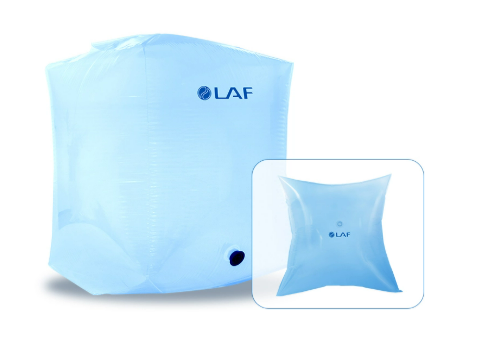
Selecting bulk liquid packaging involves finding the right balance between logistics efficiency and product safety. Moving from traditional rigid containers to lined Intermediate Bulk Containers (IBCs) brings specific safety considerations into play. Contamination, flavor scalping, or regulatory issues from non-compliant packaging can lead to costly product recalls and disrupt supply chains.
Understanding structural properties, regulatory guidelines, and safety requirements helps separate a compliant packaging solution from a risky one. These elements distinguish a genuine food grade IBC liner from standard industrial options. The following insights into polymer safety, barrier technologies, and global compliance standards offer procurement and QA teams a practical framework for evaluating suppliers.
Key Takeaways
A certified food-grade IBC liner utilizes premium virgin resins with documented chemical migration limits, designed strictly for single-use applications.
These inner bags are recyclable but not reusable, guaranteeing optimal hygiene for transporting non-hazardous liquids.
Regulatory compliance depends on verifiable Declarations of Compliance (DoC) meeting FDA (21 CFR) or EU (10/2011) standards.
The Defining Differences: Food-Grade vs. Non-Food IBC Liners
Resin Origins
Safe food contact relies on plastics extruded from high-quality virgin resins. These resins offer superior purity as they go through controlled manufacturing processes without unknown additives. Contrast this stringent requirement with a non-food IBC liner. Industrial-grade alternatives frequently incorporate post-consumer recycled (PCR) plastics or industrial offcuts to reduce costs. Such recycled components pose chemical leaching risks, potentially introducing unverified substances into consumables. Food-grade IBC liners focus exclusively on single-use, recyclable designs that are never reused.
The Threat of Migration
Resin purity loses its value if the production environment introduces contaminants. Food-safe manufacturing requires strict ambient controls. Cleanrooms filter airborne particulates and help prevent microbial contamination long before the packaging reaches the filling stage. Standard industrial options might be produced in open-air facilities, exposing the inner contact layers to dust and airborne bacteria.
Composition and Customization
Modern bulk packaging typically relies on advanced co-extruded films, since single-layer plastics may not offer adequate protection for sensitive fluids. Engineers bond multiple specialized layers together to create a stronger barrier. A high-quality IBC liner is highly customizable, allowing for tailored film structures based on the specific non-hazardous liquid being transported. Polyethylene (PE) serves as a common direct-contact layer due to its chemical inertness. It resists reacting with many food acids or bases, helping the product retain its intended flavor profile.
Oxygen and Moisture Barriers
Many liquid consumables degrade when exposed to oxygen. To address this, EVOH (Ethylene Vinyl Alcohol) or metallized polyester layers can be integrated into the film structure. EVOH acts as a strong barrier against oxygen ingress, while metallized layers effectively block moisture. These barriers are highly beneficial when transporting sensitive non-hazardous goods like edible oils, dairy, and liquid flavorings. Without proper barriers, oxygen can permeate the packaging, potentially turning premium olive oils rancid and degrading volatile flavor compounds.
Tensile Strength & Elongation
Puncture resistance plays a major role in structural integrity during global transit. Quality films display good tensile strength and elongation capabilities, allowing the packaging to flex without tearing under fluid pressure. Seam integrity is equally critical. These films are typically sealed together using heat and pressure. A failure in the heat seal can cause product loss, and microscopic seam fractures may invite localized microbial contamination.
Global Regulatory Standards and Compliance Verification
North American Standards (FDA)
Handling bulk non-hazardous food liquids in North America requires adherence to FDA food contact regulations. Buyers should verify that the packaging complies with specific sections of FDA 21 CFR. For example, Section 177.1520 covers olefin polymers used for direct food contact, detailing permissible catalysts and monomers. A generalized claim of being safe for food is often insufficient; documentation should reference the specific CFR section that matches your operating conditions.
European Standards (EU/EFSA)
European markets enforce rigorous safety rules for plastics intended for food contact. EU Regulation No. 10/2011 covers plastic materials and articles intended for food contact, featuring a positive Union list of authorized substances. It also sets limits for OML and SML testing across various food simulants. Reliable suppliers should offer detailed declarations showing their films meet these EU thresholds.
GFSI-Recognized Certifications
Procurement teams often seek packaging manufactured at facilities certified under GFSI-benchmarked schemes. Valid certifications under FSSC 22000 help validate the food safety management system. These certifications review plant sanitation, pest control, and personnel hygiene, confirming that the facility handles packaging production with the same rigorous controls applied to food processing.
Niche Requirements
Global supply chains often navigate complex dietary requirements, which may necessitate verifiable Kosher and Halal certifications. Kosher and Halal audits verify that all additives meet relevant religious compliance rules. For packaging applications, manufacturers typically use plant-based or synthetic additives to satisfy requirements for diverse international markets.
Regulatory Standard Comparison Chart
Regulatory Body
Primary Standard
Key Focus Area
Testing Requirements
FDA (USA)
21 CFR 177.1520
Olefin Polymers & Resins
Extractability under specific use conditions.
EFSA (Europe)
EU No. 10/2011
Plastic Food Contact Materials
OML (Overall) and SML (Specific) migration limits.
GFSI
FSSC 22000
Facility Hygiene & QMS
Annual audits of cleanrooms, HACCP, and traceability.
Operational Compatibility: Matching the Liner to the Container and Product
Format Adaptation
External containers have distinct structural differences. Rigid plastic IBCs feature smooth internal walls, while corrugated bulk boxes behave differently. An IBC liner for paper IBC systems is highly customizable and requires specific gusseting. The film needs to unfold properly into the square corners of the box and requires good flex-crack resistance. Paper IBCs, widely used for transporting non-hazardous liquids, can bulge slightly under pressure, causing the inner bag to flex during transit. Conversely, if shipping non-liquid commodities, a Dry Bulk Liner is engineered specifically for handling non-hazardous powders, granules, and other dry bulk goods.
Liquid Dynamics
Moving bulk fluids generates significant kinetic energy. A purpose-built liquid IBC liner incorporates specific engineering to manage this stress. Much like a Flexitank designed for larger volume shipments of non-hazardous liquids, an IBC liner needs to absorb dynamic shifts during transport. Strong bottom-discharge valves help handle hydraulic pressure during transit stops to prevent rupturing.
Fill and Discharge Mechanisms
Maintaining a closed-loop system protects the contents from ambient air. Aseptic fitments enable processors to fill sterile products safely, while tamper-evident seals offer visual proof of supply chain security.
The Procurement Framework: How to Evaluate Suppliers
Request Verifiable Documentation
Buyers should look for verifiable documentation regarding packaging safety rather than relying on informal claims. Request a formal, up-to-date Declaration of Compliance (DoC), alongside batch-specific Certificates of Analysis (COA) for shipments. These records help ensure the supplier stands by their safety standards.
Third-Party Migration Testing
Beyond in-house data, reviewing independent, third-party lab results is beneficial. These reports help confirm that migration limits stay within safe parameters under specific operational conditions. Hot-fill applications require extra attention, as elevated temperatures can accelerate chemical leaching. Testing facilities typically evaluate the packaging using simulants heated to match the intended filling temperature.
Traceability Systems
Assessing a supplier's lot-tracking capabilities is highly recommended. A dependable manufacturing partner maintains supply chain visibility and can trace a defective film back to its production time. Identifying the exact batch of raw resin used is a standard expectation. Good traceability isolates issues quickly, helping to prevent localized defects from escalating.
Conclusion
Specifying an IBC liner for food contact acts as an important step in risk mitigation. The selection process requires attention to packaging properties and comprehensive regulatory documentation. Choosing standard industrial-grade plastics for sensitive applications can introduce unnecessary chemical risks into the supply chain.
Certified food-grade liners are engineered strictly for single-use. They are recyclable but not reusable, which guarantees optimal hygiene and safety when handling non-hazardous goods.
Cross-functional alignment among QA, logistics, and procurement teams helps streamline the process. When finalizing specifications, these departments can collaborate to support both consumer safety and operational efficiency. Checking a supplier's DoCs and third-party tests helps confirm they can meet specific non-hazardous bulk packaging requirements.
LAF supplies food-grade IBC liners for edible oils, dairy, liquid flavorings, fruit juice concentrates, and other non-hazardous liquid food products. Because compliance depends on documented film architecture and verifiable migration limits rather than a generic food-safe claim, selecting the right liner requires evaluating resin origin and contact-layer material, EVOH and moisture-barrier configuration, valve and fitment hygiene, applicable FDA 21 CFR or EU 10/2011 requirements, and compatibility with existing filling and discharge systems. Buyers can Contact LAF to request a Declaration of Compliance, batch-specific Certificates of Analysis, and third-party migration test reports, and arrange sample validation before full-scale procurement.
FAQ
Q: Can standard PE liners be used for high-fat food products?
A: Not in all scenarios. High-fat products can act as solvents. Specialized testing helps confirm that plasticizers do not migrate into the fat. Frequently, specific polymer blends are required to meet Specific Migration Limits (SML) safely.
Q: What distinguishes an aseptic liner from a standard food-grade version?
A: While both options utilize food-safe, single-use films, aseptic versions typically undergo gamma irradiation or similar sterilization processes post-manufacturing. They feature specialized fitments that allow shelf-stable non-hazardous liquids to be packed without requiring refrigeration.
Q: What is an IBC Liner?
A: An IBC Liner is a customizable packaging solution placed inside an Intermediate Bulk Container. It is designed for storing and transporting non-hazardous liquids and semi-liquids. Like bulk container liners, IBC liners are food-grade and single-use, preventing cross-contamination while being highly customizable to fit specific tank dimensions and valve setups.
Q: How do I verify regulatory compliance?
A: Request a Letter of Guarantee or a formal Declaration of Compliance from the manufacturer. This document should indicate that the resins and processes comply with relevant sections of FDA 21 CFR or EU standards for the specific food type and filling conditions.