Key Takeaways
l Flexitank safety is a system, not a single product feature — it depends on container condition, cargo compatibility, installation, loading, unloading, and manufacturer quality controls working together.
l The Container Owners Association (COA) Code of Practice (TG-07) and PAS 1008:2018 define the industry standards for safe flexitank operations.
l Container condition is as important as flexitank quality — a damaged or unsuitable container creates risks even when the flexitank itself is properly manufactured.
l While industry estimates suggest that valve-to-door impact accounts for a significant proportion of flexitank leakage incidents, improper installation and inadequate container preparation also remain critical risk factors—underscoring why strict adherence to installation and preparation protocols is essential.
l A reliable flexitank manufacturer provides testing documentation, installation guidance, container selection requirements, and technical support — not just a product.
Introduction: Is a Flexitank Safe?
Yes, a professionally manufactured and correctly installed flexitank can be a reliable solution for transporting suitable non-hazardous bulk liquids. This is consistent with the framework established by the Container Owners Association (COA) Code of Practice for Flexitank Container Systems (TG-07) and PAS 1008:2018, which together define the performance, testing, and quality management requirements for safe flexitank operations.
However, flexitank safety does not depend on the bag alone.
A safe flexitank operation is a complete system involving:
l The flexitank design
l Material compatibility
l Container condition
l Installation
l Loading procedures
l Cargo temperature
l Loading quantity
l Valve configuration
l Transportation conditions
l Unloading procedures
l Manufacturer and operator quality controls
This is why companies searching for a reliable flexitank manufacturer should evaluate more than product price.
The Container Owners Association (COA) has established a Code of Practice for Flexitank Container Systems (TG-07) covering areas including manufacturing, testing, installation, operation, training, and quality management. Manufacturers and operators that conform to the provisions of TG-07 achieve COA Quality Conformance (CQC) and are listed on the Flexitank Quality List (FQL). PAS 1008:2018 also specifies performance and testing requirements for single-use flexitanks used for intermodal transport of suitable liquid commodities in general-purpose freight containers.
The key principle is simple:
Flexitank safety is a system, not a single product feature.
1. What Makes a Flexitank Safe?
A professionally designed flexitank should be engineered around the characteristics of the cargo and the conditions it will encounter during transportation.
Important safety factors include:
1.1 Material Compatibility
The flexitank film must be suitable for the liquid being transported.
Different liquids have different:
l Chemical properties
l Viscosity
l Density
l Temperature requirements
l Interaction with packaging materials
A flexitank manufacturer may need to evaluate cargo compatibility before recommending a specific design.
PAS 1008:2018 notes that compatibility between the commodity and the flexitank film may need to be assessed because suitability depends on the chemical and physical properties of both the liquid and the film.
1.2 Mechanical Strength
The flexitank must withstand the physical forces associated with:
l Filling
l Handling
l Road transportation
l Rail transportation
l Ocean transportation
l Loading and unloading
1.3 Valve Integrity
Loading and discharge valves are critical components of a flexitank system.
The valve connection must maintain its integrity during:
l Filling
l Transportation
l Discharge
COA's technical guidance includes routine testing of loading and discharging valves as part of flexitank quality management.
1.4 Container Compatibility
A flexitank is installed inside a freight container. The condition of that container therefore directly affects the safety of the entire system.
A damaged container can create risks even when the flexitank itself has been properly manufactured.
1.5 Manufacturer Quality Systems
A professional flexitank manufacturer should operate documented quality management systems covering material testing, production controls, finished product inspection, and traceability.
2. Does a Flexitank Damage or Deform a Shipping Container?
A properly selected, installed, and loaded flexitank should be compatible with a suitable freight container.
However, container bulging or deformation can occur if the container, flexitank, loading conditions, or installation process is unsuitable.
Potential risk factors include:
l Overloading
l Incorrect loading quantity
l Unsuitable container condition
l Improper installation
l Damaged container walls or floor
l Sharp edges or protrusions
l Incorrect restraining equipment
l Improper door operation
LAF's published container-selection guidance specifically recommends inspecting the container for structural problems, sharp edges, dents, rust, loose components, floor defects, contamination, and other conditions that could damage a flexitank.
For this reason, container inspection should be treated as an essential part of flexitank safety, not as an optional step.
3. What Container Should Be Used for a Flexitank?
Not every shipping container is suitable for flexitank installation.
Before installation, the container should be inspected for:
Structural Condition
The container should be structurally sound and suitable for the intended transportation service.
Interior Condition
The interior should be:
l Clean
l Dry
l Free of sharp objects
l Free of protruding nails or screws
l Free of significant dents
l Free of loose floor components
l Free of residues that could contaminate the cargo
Walls and Floor
Any sharp edge, damaged surface, protrusion, or defect that could puncture, abrade, or otherwise damage the flexitank should be removed or adequately protected.
Doors and Restraining System
The doors must be capable of closing correctly without interfering with the flexitank or its restraining system.
Container Certification
The container should have the required valid identification and safety markings for the intended transportation service.
LAF's published container guidance emphasizes that a container with questionable structural integrity or unsuitable installation conditions should be repaired or replaced rather than used.
4. How Should a Flexitank Be Installed?
Correct installation is one of the most important factors in preventing flexitank damage.
The installation process varies according to the flexitank design, container, valve configuration, and manufacturer's instructions.
A typical installation process includes:
Step 1: Inspect the Container
Confirm that the container meets the manufacturer's requirements.
Step 2: Clean and Prepare the Interior
Remove:
l Debris
l Sharp objects
l Loose hardware
l Contaminants
l Residues
Protect areas that could potentially contact and damage the flexitank.
Step 3: Position the Flexitank
The flexitank should be correctly positioned inside the container according to the manufacturer's installation instructions.
Step 4: Install the Restraining System
The required bulkhead, protective materials, or other restraining components should be correctly installed.
Step 5: Check the Valve
Before loading, verify that the valve and connection system are correctly positioned and secured.
Step 6: Final Inspection
The installation should be inspected before liquid loading begins.
LAF's installation guidance emphasizes container preparation, removal or protection of sharp edges, correct positioning, inspection before loading, and following the manufacturer's installation instructions.
5. How Should a Flexitank Be Loaded Safely?
Loading is another critical stage of flexitank operation.
Before loading, operators should confirm:
l The cargo is compatible with the flexitank
l The flexitank is correctly installed
l The container is suitable
l Valves and connections are secure
l Loading equipment is compatible
l The planned loading quantity is within the product specification
l The cargo temperature is within the manufacturer's specified range
Avoid Overfilling
The flexitank should never be filled beyond its specified capacity.
The correct loading quantity depends on factors such as:
l Flexitank nominal capacity
l Liquid density
l Cargo temperature
l Container limitations
l Transportation requirements
l Manufacturer's instructions
Different flexitank models can have different loading requirements. Buyers should therefore use the manufacturer's technical documentation rather than applying a generic loading percentage to every flexitank.
LAF's published installation guidance recommends a maximum fill level of a maximum fill level of 100% ± 3% (i.e., 97%–103%) for the applicable flexitank guidance and emphasizes controlled loading and inspection after filling.
6. Does Liquid Temperature Affect Flexitank Safety?
Yes.
Temperature can affect:
l Liquid expansion
l Liquid viscosity
l Film performance
l Internal pressure
l Loading and unloading behavior
For this reason, cargo temperature should be considered before loading.
A flexitank designed for one temperature range may not be appropriate for a different application.
For example:
l Standard food liquids may have relatively moderate loading temperatures.
l High-viscosity liquids may require heating during unloading.
l High-temperature cargo requires specially designed flexitank systems.
The appropriate temperature range should always come from the specific flexitank manufacturer's technical specification.
Do not assume that every flexitank can transport hot liquids.
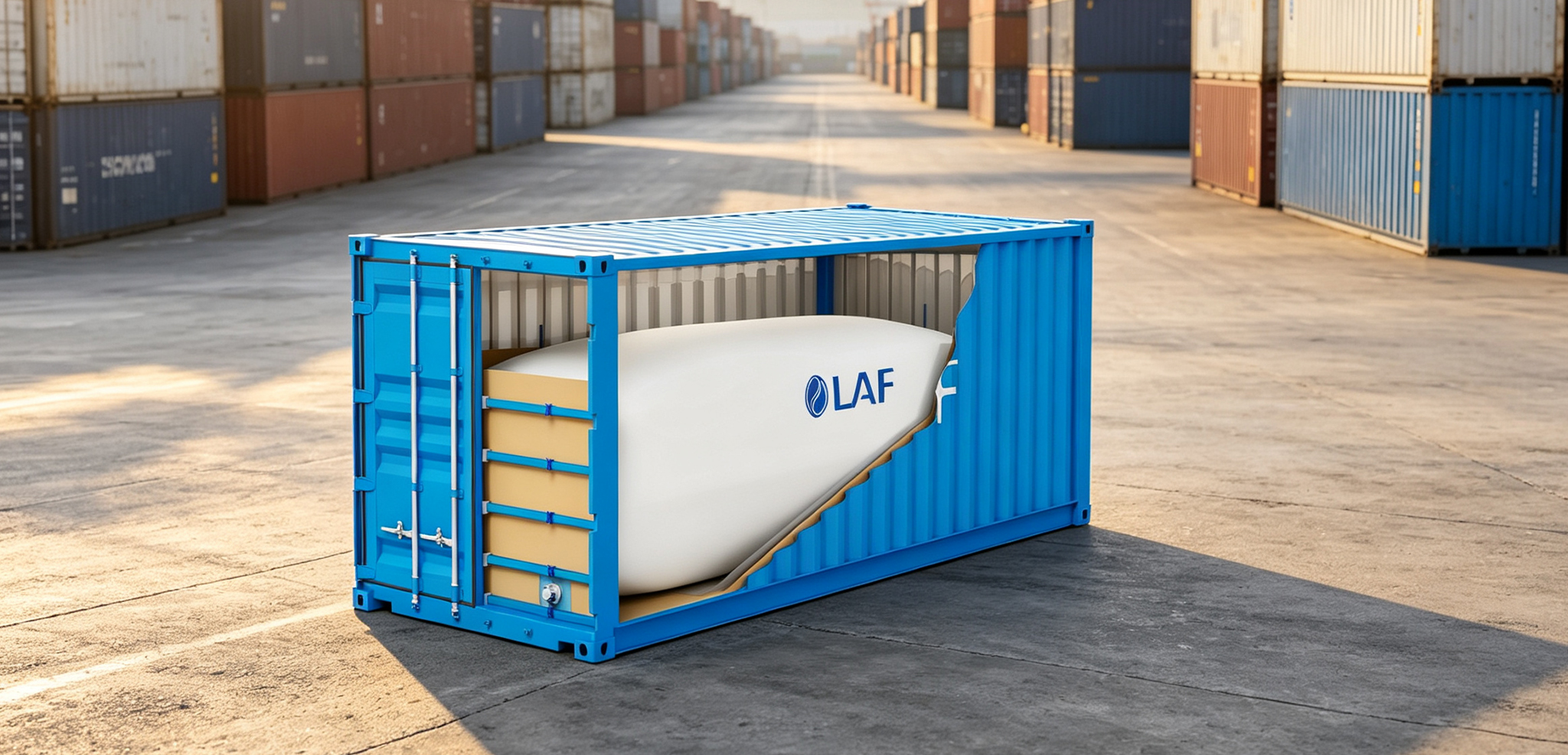
7. What Liquids Can Be Transported in a Flexitank?
Flexitanks are commonly used for suitable non-hazardous bulk liquids.
Typical applications include:
Food and Beverage Liquids
l Edible oils
l Palm oil
l Vegetable oils
l Rapeseed oil
l Wine
l Juice concentrates
l Syrups
l Food ingredients
Industrial Liquids
l Lubricants
l Base oils
l Industrial oils
l Latex
l Resins
l Glycerin
Non-Hazardous Chemical Liquids
Some non-hazardous chemicals can also be transported in flexitanks, subject to material compatibility and applicable transportation requirements.
LAF's product and FAQ materials list food products, lubricants, latex, plasticizers, surfactants, base oils, glycerin, industrial oils, and other liquid products among applications for its flexitank solutions.
8. Can a Flexitank Carry Dangerous Goods?
A standard flexitank should not be assumed to be suitable for dangerous goods.
PAS 1008:2018 covers single-use flexitanks for intermodal transport of liquid commodities that are not classified or regulated as dangerous goods.
Whether a particular liquid can legally and safely be transported in a flexitank depends on:
l Cargo classification
l Applicable dangerous-goods regulations
l Flexitank design
l Material compatibility
l Shipping line requirements
l Container requirements
l Route requirements
l Manufacturer approvals
Therefore, companies transporting potentially regulated cargo should obtain a technical compatibility assessment and regulatory confirmation before selecting a flexitank.
Do not use a standard flexitank for dangerous goods simply because the liquid can physically fit inside it.
9. What Certifications and Standards Should Buyers Check?
When evaluating high-quality flexitank manufacturers, buyers should look beyond marketing claims and ask for relevant documentation.
Important standards and quality references may include:
COA Code of Practice (TG-07)
The Container Owners Association's TG-07 Code of Practice for Flexitank Container Systems addresses flexitank system requirements and quality management.
The COA framework includes areas such as:
l Manufacturer quality management
l Installation and operating instructions
l Material testing
l Valve testing
l Rail impact testing
l Factory-site auditing
Manufacturers that conform to TG-07 achieve COA Quality Conformance (CQC) and are listed on the Flexitank Quality List (FQL). The CQC is required for each manufacturer, each flexitank design and type, and each manufacturing site.
PAS 1008:2018
PAS 1008:2018 specifies performance and testing requirements for single-use flexitanks used for suitable liquid commodities in general-purpose freight containers.
It addresses areas including:
l Flexitank film material properties
l Valve leak-tightness
l Rail impact testing
l Flexitank information requirements
Food-Contact Requirements
For food-grade flexitanks, buyers may need to verify compliance with applicable food-contact regulations, such as:
l FDA requirements for the U.S. market
l EU food-contact requirements
l FSSC 22000
l Other customer or destination-market requirements
The exact certification requirements depend on the cargo and destination market.
10. What Quality Tests Should a Flexitank Manufacturer Perform?
A professional flexitank manufacturer should have a documented quality control system.
Depending on the product and applicable standard, testing may include:
Material Tests
l Film properties
l Thickness
l Mechanical performance
l Material identification
l Heat seal strength
l Seam integrity
l Heat sealing consistency
Valve Tests
l Valve integrity
l Leak-tightness
l Functional performance
Finished Product Tests
l Leakage testing
l Visual inspection
l Dimensional inspection
l Packaging inspection
COA's technical guidance specifically requires material and valve testing to be carried out in accordance with PAS 1008:2018, with test records maintained for review.
For example, LAF Flexitanks have successfully passed the CRCC Rail Impact Test and the AAR (Association of American Railroads) Rail Impact Test, demonstrating their durability for rail transportation applications. LAF also fully meets the COA Code of Practice for Flexitanks and has participated in the revision of COA industry standards.
11. What Causes Flexitank Leakage?
Leakage is one of the most important risks buyers want to understand.
A leak can result from multiple factors rather than a single manufacturing defect.
Industry experience indicates that valve-to-door impact, improper installation, and inadequate container preparation are among the most significant risk factors for flexitank leakage.
Potential causes include:
l Damaged container surfaces
l Sharp objects inside the container
l Incorrect installation
l Incorrect loading
l Overloading
l Valve or connection problems
l Cargo incompatibility
l Improper handling
l Damage during transportation
LAF's container-selection guidance identifies sharp edges, tools, metal components, damaged container surfaces, and unsuitable container conditions as potential causes of flexitank damage and leakage.
This is why simply asking a manufacturer for its "damage rate" does not provide the complete picture.
A more useful procurement question is:
What quality controls, installation procedures, testing standards, and technical support does the manufacturer provide to reduce operational risk?
12. What Should You Do If a Flexitank Shows a Leak?
If leakage or abnormal behavior is detected, operators should prioritize safety and follow the manufacturer's emergency procedures.
General principles include:
1. Stop the relevant loading or unloading operation if it is safe to do so.
2. Keep personnel away from any spilled liquid until the cargo has been identified and the appropriate precautions are known.
3. Follow the cargo's safety data and site emergency procedures.
4. Prevent unauthorized access to the affected area.
5. Contact the flexitank supplier or technical support team.
6. Follow the manufacturer's instructions for containment, transfer, or disposal.
The appropriate response depends heavily on the liquid being transported.
For food-grade liquids, the primary concerns may include product contamination and cleanup.
For industrial liquids, additional chemical, environmental, or occupational hazards may apply.
Never assume that a leak response is the same for every cargo.
13. Can Container Bulging Be Prevented?
Container bulging risk can be reduced by controlling the complete flexitank system.
Key measures include:
l Selecting a suitable container
l Checking the container condition
l Using the correct flexitank capacity
l Loading within specified limits
l Installing the restraining system correctly
l Following loading instructions
l Avoiding unsuitable cargo temperatures
l Ensuring the container doors can close correctly
LAF's published container-condition guidance emphasizes suitable container condition, loading limits, protection against internal defects, and correct door operation.
The important point is that container bulging should not automatically be attributed to the flexitank itself. The entire container-flexitank-cargo system needs to be evaluated.
14. How Should a Flexitank Be Unloaded?
Safe unloading requires the same level of attention as loading.
Before discharge:
l Confirm the cargo and unloading equipment are compatible.
l Check the valve and hose connections.
l Make sure the discharge area is properly prepared.
l Follow the manufacturer's discharge procedure.
l Monitor the unloading process.
High-viscosity liquids may require additional discharge equipment or temperature management.
For example, LAF's published product information describes customized discharge solutions for certain high-viscosity liquids, including heating systems and specialized valves.
The exact unloading procedure should always be based on the flexitank model and cargo characteristics.
15. Is Flexitank Installation Difficult?
Flexitank installation is generally a structured process, but it should be performed according to the manufacturer's instructions and by personnel who understand the equipment.
The complexity depends on:
l Flexitank design
l Valve configuration
l Container type
l Restraining system
l Cargo application
l Local operating conditions
LAF provides installation guidance for its flexitank systems, including container preparation, installation, loading, and inspection procedures.
For large-volume operations, companies should establish standardized installation procedures and train relevant warehouse or logistics personnel.
16. How Do You Choose a Reliable Flexitank Manufacturer?
When comparing flexitank manufacturers, buyers should evaluate at least seven areas.
1. Manufacturing Capability
Does the supplier operate its own flexitank factory?
2. Quality Management
Does the company have documented inspection and testing procedures?
3. Industry Standards
Can the manufacturer provide evidence of relevant COA, PAS 1008, ISO, food-contact, or transportation requirements? Does the manufacturer hold COA Quality Conformance (CQC) and appear on the Flexitank Quality List (FQL)?
4. Cargo Compatibility
Can the supplier assess whether the flexitank material is suitable for your liquid?
5. Installation Support
Does the manufacturer provide installation instructions and technical support?
6. Global Service
Can the supplier support customers at different ports and transportation locations?
7. Traceability and Technical Documentation
Can the supplier provide product specifications, testing records, installation instructions, and other relevant documentation?
These factors provide a more meaningful way to identify a reliable flexitank supplier than comparing price alone.
17. LAF Technology's Approach to Flexitank Safety
LAF Technology is a professional China flexitank manufacturer providing food-grade and industrial bulk liquid transportation solutions.
According to LAF's published technical information, its safety and quality-control approach includes:
l Raw material and component testing
l Cargo compatibility considerations
l Production-process quality control
l Finished-product inspection
l Material and valve testing
l PAS 1008:2018-based testing and production procedures
l COA impact testing for applicable systems
l Railway impact testing for applicable railway products, including CRCC Rail Impact Test and AAR Rail Impact Test
LAF has obtained COA Quality Conformance (CQC) and is listed on the COA Flexitank Quality List (FQL). The company has also participated in the revision of COA industry standards and led updates to CRCC railway transportation standards.
LAF is one of the first companies to have passed the Railway Impact Test in China and was the first flexitank operator in Asia approved by the American Railroads Impact Test.
LAF also publishes container selection and installation guidance for customers using its flexitank systems.
This approach reflects an important principle in flexitank transportation:
Product quality, container condition, installation, loading, and cargo compatibility must work together to achieve reliable transportation performance.
Frequently Asked Questions About Flexitank Safety
Is a flexitank safe?
Core conclusion: A professionally manufactured flexitank is safe when the correct product, container, installation, and loading procedures are used.
Detailed explanation: A professionally manufactured flexitank can be a reliable solution for transporting suitable non-hazardous bulk liquids when the correct product, container, installation method, loading procedure, and transportation conditions are used. Safety depends on the complete flexitank system—including material compatibility, container condition, installation quality, loading procedures, and cargo temperature—rather than the bag alone. This system-based approach is consistent with the COA Code of Practice for Flexitank Container Systems (TG-07).
Is a flexitank easy to break?
Core conclusion: A flexitank is durable when properly manufactured and installed, but it can be damaged by sharp objects, unsuitable container conditions, incorrect installation, improper handling, or unsuitable loading conditions.
Detailed explanation: A flexitank is flexible packaging and can be damaged by sharp objects, unsuitable container conditions, incorrect installation, improper handling, or unsuitable loading conditions. This is why container inspection and correct installation are essential.
What is the damage rate of flexitanks?
Core conclusion: There is no single universal damage rate that applies to every flexitank manufacturer, cargo, route, or operating condition.
Detailed explanation: A meaningful comparison should consider:
l Product design
l Container condition
l Installation procedures
l Cargo type
l Loading practices
l Transportation route
l Quality management system
Buyers should request manufacturer-specific quality and incident data where appropriate rather than relying on a generic industry percentage.
Does a flexitank affect or deform the container?
Core conclusion: A properly selected and installed flexitank should not damage a standard shipping container.
Detailed explanation: Container deformation risk can increase when containers are unsuitable, damaged, improperly loaded, or when installation requirements are not followed. Container bulging risks are typically associated with missing door bars, overloading, or improper installation.
What is the maximum loading capacity of a flexitank?
Core conclusion: The maximum capacity depends on the specific flexitank design and applicable transportation requirements.
Detailed explanation: Flexitank capacities vary by container size and model. Typical volumes range from 14,000 L to 26,000 L for 20-foot containers and 8,000 L to 28,000 L for 40-foot containers. Buyers should always refer to the manufacturer's product specification for the actual rated capacity of each model.
What temperature can a flexitank handle?
Core conclusion: Temperature limits vary by flexitank design and cargo.
Detailed explanation: The loading temperature should always remain within the manufacturer's specified range. High-temperature liquids may require specially designed flexitank systems.
Can a flexitank transport dangerous goods?
Core conclusion: A standard flexitank should not be assumed to be suitable for dangerous goods.
Detailed explanation: PAS 1008:2018 covers suitable non-dangerous liquid commodities within its defined scope. Dangerous-goods transportation requires separate evaluation of the cargo classification, regulations, equipment, route, and approvals.
What liquids can be transported in a flexitank?
Core conclusion: Flexitanks are commonly used for suitable non-hazardous liquids such as edible oils, wine, juice concentrates, syrups, lubricants, base oils, latex, glycerin, and other compatible industrial liquids.
Detailed explanation: Cargo compatibility must be confirmed before shipment. A reliable flexitank supplier should evaluate material compatibility before recommending a specific design.
Does flexitank installation require professional technicians?
Core conclusion: Installation should follow the manufacturer's instructions and be performed by trained personnel familiar with the specific flexitank system.
Detailed explanation: For large-scale operations, standardized procedures and training can help reduce installation-related risks.
What should buyers ask a flexitank manufacturer before placing an order?
A buyer should ask:
1. Is the flexitank suitable for my specific liquid?
2. What certifications and testing documentation are available? Does the manufacturer hold COA Quality Conformance (CQC)?
3. What container requirements must be followed?
4. What are the loading temperature and capacity limits?
5. What installation procedure should be used?
6. What unloading equipment is required?
7. What technical support is available during transportation?
8. What quality-control and traceability systems are in place?
Flexitank Safety Checklist for Buyers
Before shipment, buyers and operators should confirm:
¨ The cargo is suitable for flexitank transportation.
¨ Material compatibility has been confirmed.
¨ The flexitank model matches the cargo requirements.
¨ The container is structurally sound.
¨ The container interior is clean and free of sharp objects.
¨ The flexitank has been installed according to the manufacturer's instructions.
¨ Valves and connections have been checked.
¨ Loading quantity is within the specified limit.
¨ Cargo temperature is within the specified range.
¨ Loading equipment is compatible.
¨ Required documentation is available.
¨ Unloading equipment and procedures have been prepared.
¨ Emergency and spill-response procedures are available where applicable.
Conclusion: Flexitank Safety Starts Before Loading
The safest way to use a flexitank is to treat it as an integrated transportation system rather than simply a flexible bag.
A reliable flexitank manufacturer should provide:
l Appropriate material selection
l Product-specific engineering
l Quality testing
l Relevant certifications and standards, including COA CQC
l Container selection guidance
l Installation instructions
l Loading and unloading guidance
l Technical support
For buyers comparing best flexitank manufacturers, reliable flexitank suppliers, or China flexitank manufacturers, safety should be evaluated from the entire supply chain perspective.
The key questions are not simply:
"Is this flexitank safe?"
Instead, buyers should ask:
"Is the flexitank suitable for my cargo, is the container appropriate, has the system been correctly installed and tested, and does the manufacturer provide the technical support needed for safe transportation?"
That approach provides a more practical framework for reducing risk and improving reliability in bulk liquid transportation.
References
l Container Owners Association (COA). TG-07 Code of Practice for Flexitank Container Systems (2021)
l BSI Group. PAS 1008:2018 — Specification for the performance and testing of a single-use flexitank
l COA. Flexitank Quality Management List (FQML) — COA Quality Conformance (CQC) requirements
l LAF Technology. Container Selection and Installation Guidance
l LAF Technology. New Achievement: LAF Flexitanks Pass AAR Test
l LAF Technology. CRCC Railway Product Certification
About LAF Technology
Founded in 2007, LAF Technology is a professional China flexitank manufacturer and reliable flexitank supplier specializing in:
l Disposable flexitanks
l Food-grade flexitanks
l Industrial flexitanks
l Reefer flexitanks
l Trailer flexitanks
l Railway flexitank solutions (RailFlex™)
l 40ft flexitank
l Dry bulk liner solutions
l Paper IBC
l IBC liner
LAF has obtained COA Quality Conformance (CQC) and is listed on the COA Flexitank Quality List (FQL). The company has successfully passed the CRCC Rail Impact Test and the AAR Rail Impact Test, and fully meets the COA Code of Practice for Flexitanks. LAF was one of the first companies to pass the Railway Impact Test in China and was also the first flexitank operator in Asia approved by the American Association of Railroads (AAR) Impact Test.
The company's safety approach integrates material testing, production quality control, finished product inspection, and technical support for installation and container selection. LAF provides flexitank solutions for food-grade and industrial bulk liquids and supports customers with product selection, technical guidance, installation information, and global transportation applications.
For companies looking for a reliable flexitank manufacturer for international bulk liquid transportation, LAF Technology provides product and technical solutions based on cargo characteristics, transportation mode, and operational requirements.
Continue Reading
This article is part of a series on flexitank solutions and bulk liquid transportation.
Return to the overview:
➡ Article 1: Flexitank Buyer's Guide 2026: How to Evaluate Manufacturers and Choose the Right Supplier
Continue exploring related topics:
➡ Article 2: Why Are More Companies Switching to Flexitanks? A Complete Guide to Bulk Liquid Transportation
➡ Article 3: Food Grade Flexitank Guide: Certifications, Materials & Buyer Checklist
➡ Article 4: What Liquids Can Be Transported in a Flexitank?
➡ Article 5: Inside a Professional Flexitank Factory: How Quality Flexitanks Are Manufactured
For more information:
Website: www.laftechnology.com
Email: sales@flexitank.net.cn
LinkedIn: LAF Flexitank — Bulk Fluid Packaging Solution